Stone Setting Techniques Explained: Prong vs Bezel vs Pavé vs Channel
If you've ever wondered why two engagement rings of similar carat weight can look dramatically different — or why one costs $1,500 and another $5,000 — the answer is often in the setting technique. The way a stone is held in place affects everything: how secure it feels, how much light it captures, how easy it is to clean, and how much labor the jeweler invested.
This guide breaks down the four most common stone setting techniques used in modern jewelry manufacturing. Whether you're designing your first collection or evaluating a supplier's samples, understanding these techniques will help you make better decisions and communicate more effectively with your manufacturer.
1. Prong Setting
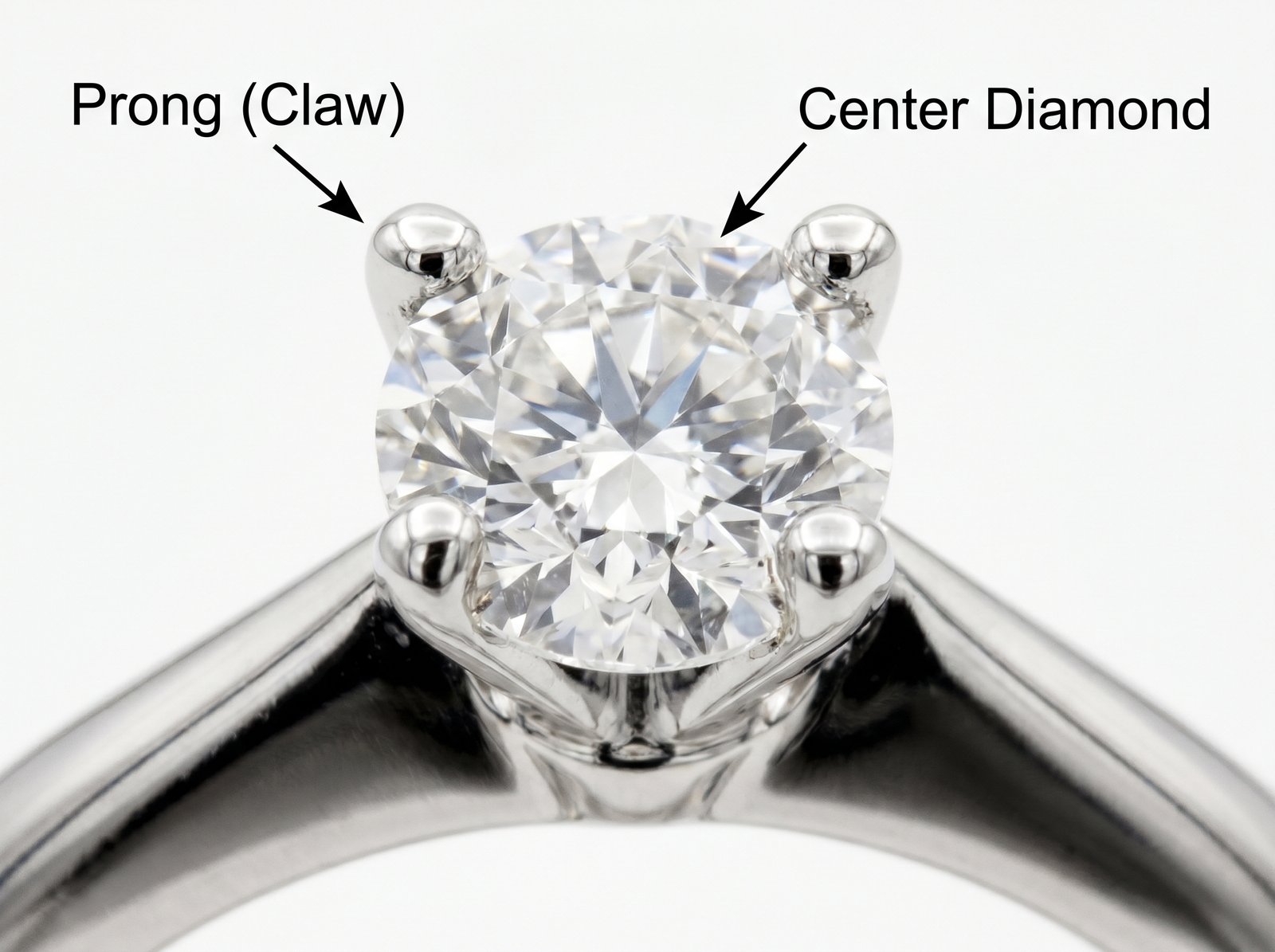
The prong setting is the most common technique in modern jewelry — and for good reason. It uses small metal claws (typically 4 or 6) to hold the stone from above, exposing maximum surface area to light.
How It Works
Thin metal "prongs" are bent over the stone's girdle (the widest part of the stone), securing it in place. The prongs can be rounded, pointed, flat, or V-shaped (called a "claw" setting). The space below the stone (called the "gallery") is open, allowing light to enter from all angles.
Variants
- 4-prong (martini): The most common. Modern, minimal, maximizes light return.
- 6-prong (tiffany/cathedral): More secure, slightly more metal coverage, classic look.
- Compass / East-West: Stone oriented horizontally for a contemporary look.
- Double claw: 8 prongs for very large stones or added security.
✅ Pros
- Maximum brilliance — least metal coverage, most light
- Clean, modern aesthetic
- Easy to clean — open back allows ultrasonic cleaning
- Cost-effective — fastest to set, lowest labor cost
❌ Cons
- Less secure than bezel — stone can dislodge if a prong breaks
- Prongs can catch on clothing or hair
- Prongs wear down over years and may need re-tipping
Best For
Engagement rings, solitaire pendants, stud earrings. Stones where maximum brilliance is the priority. Pieces that won't see heavy physical impact.
2. Bezel Setting
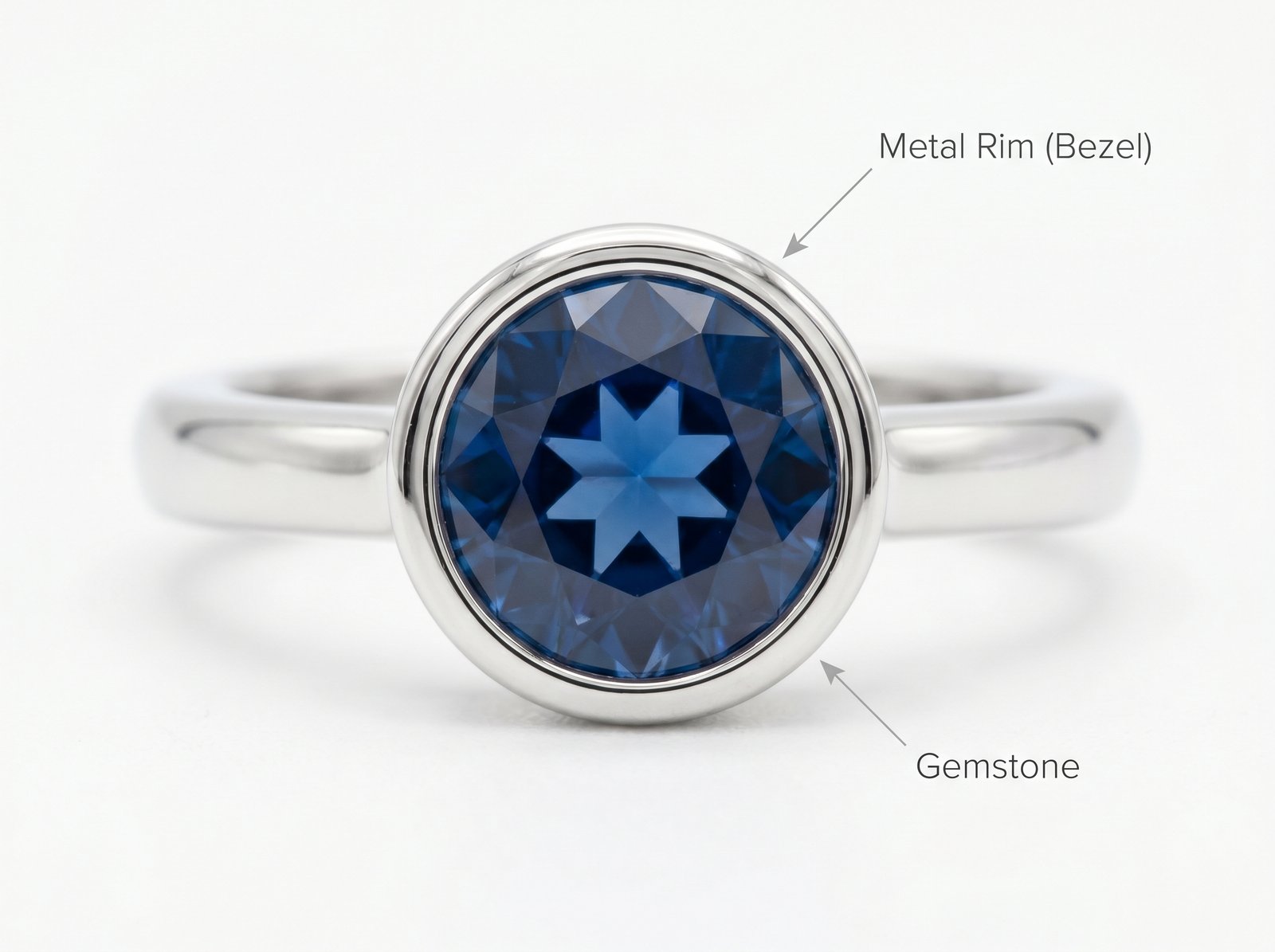
The bezel setting uses a continuous metal rim that completely encircles the stone, holding it securely from all sides. It's the oldest setting technique — think ancient Egyptian and Roman jewelry — and remains the most secure option.
How It Works
A metal "wall" is formed around the stone's perimeter (either pre-formed in CAD or hand-fabricated from metal strip), then pressed over the stone's edge to hold it in place. The result is a smooth, snag-free surface with no exposed prongs.
Variants
- Full bezel: Metal rim completely surrounds the stone. Most secure.
- Half bezel: Metal rim on two opposing sides only. More light, less security.
- Bezel with accents: Center stone in bezel, with pavé or prong-set accents around it.
✅ Pros
- Most secure — extremely difficult to dislodge the stone
- Snag-free — smooth surface won't catch on clothing
- Modern, clean look — popular in contemporary designs
- Protects stone edges from chipping
❌ Cons
- Less brilliance — metal rim blocks some light from sides
- More metal weight — heavier piece, higher material cost
- More labor-intensive than prong setting
Best For
Active wear, men's jewelry, signet rings, pieces with colored stones that need edge protection. Modern minimalist designs. Customers who prioritize security over maximum brilliance.
3. Pavé Setting
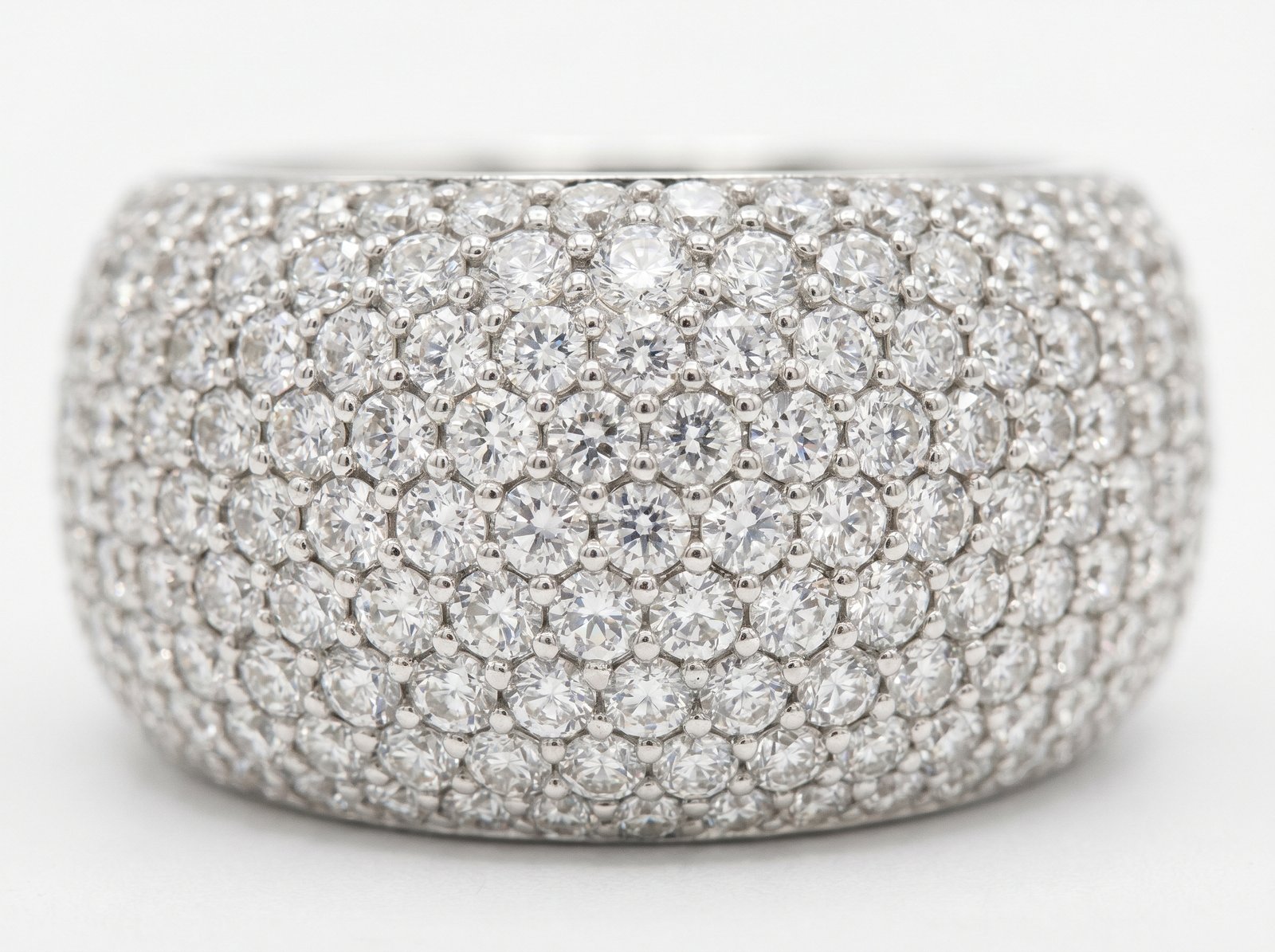
Pavé (French for "paved") setting is a technique where multiple small stones are set close together, with minimal metal showing between them. The result is a continuous surface of sparkle — a "paved" look of diamonds.
How It Works
The setter drills tiny holes in the metal, places a small stone in each hole, then uses a specialized tool to raise small beads of metal from the surrounding metal to grip each stone. The metal "beads" appear as small dots between stones. The technique requires extreme precision and is typically done by a specialist setter rather than a general jeweler.
Variants
- Standard pavé: Stones in a single row, beads between them.
- Micro pavé: Stones under 1.3mm, often in multiple rows. Requires a microscope and specialist tools.
- U-cut pavé: U-shaped cuts in metal hold stones without beads. Slightly more metal showing.
- French pavé: V-shaped cuts for more light return.
✅ Pros
- Maximum sparkle — continuous surface of stones
- Luxury look — high perceived value at relatively modest carat weight
- Versatile — works on bands, halos, pendants, and accents
❌ Cons
- Most labor-intensive — requires specialist setter
- Most expensive — setting labor runs $3-8 per stone
- Hard to repair — if a stone falls out, the surrounding beads may need re-lifting
Best For
Eternity bands, halo engagement rings, statement pendants. Brands targeting the $500-$5,000+ range. Pieces where the visual impact of "lots of stones" is the selling point.
4. Channel Setting
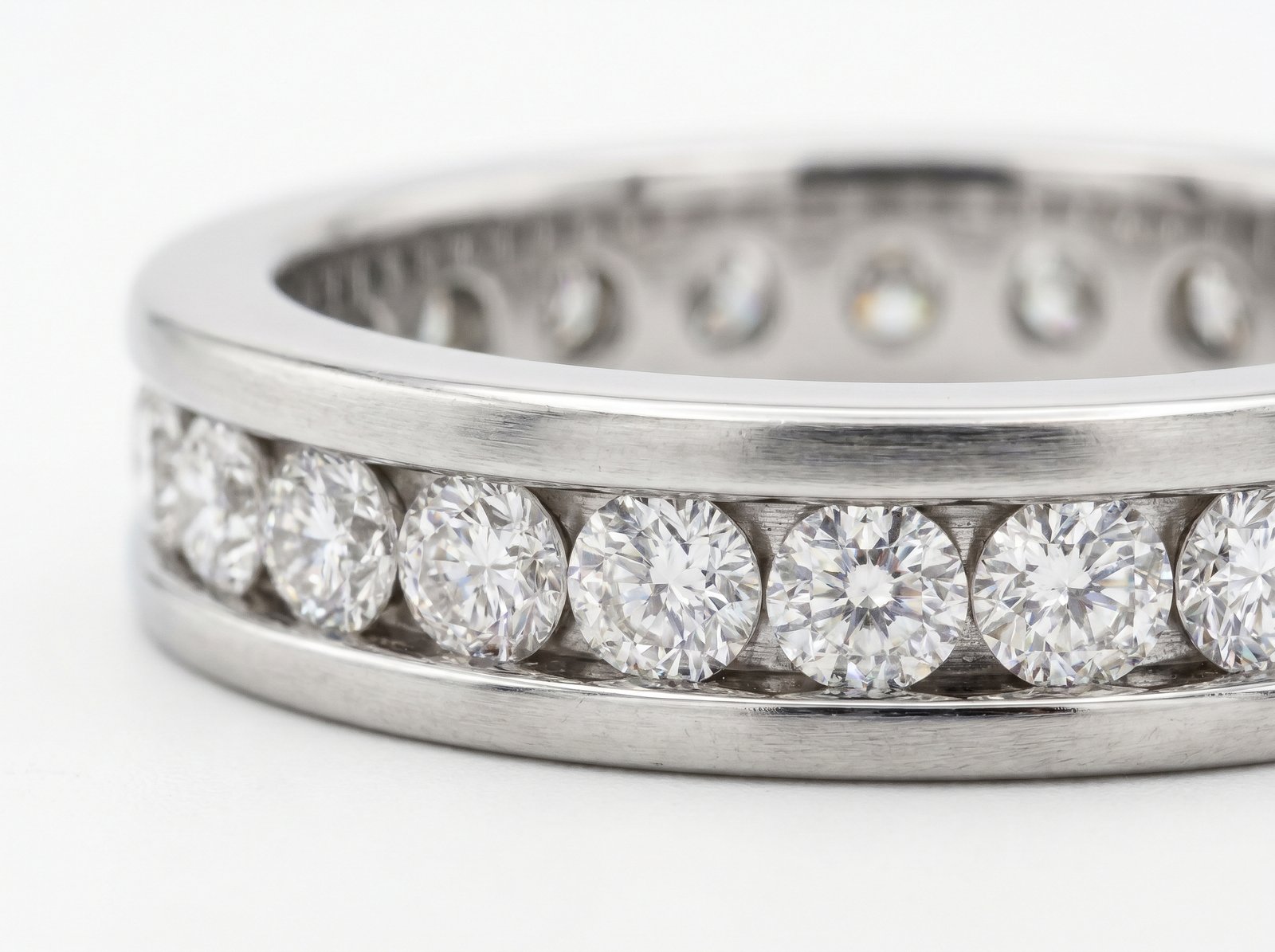
The channel setting places stones in a continuous channel between two parallel metal rails. The stones are flush with the top of the metal, with no metal beads or prongs visible — just a smooth row of stones.
How It Works
Two parallel metal walls (rails) are formed in the jewelry piece, and stones are placed in a row between them. A setter uses a special hammer or pusher to tighten the rails against the stones, locking them in place. The stones touch each other (or are separated by tiny spacers), and the entire row is held by friction against the metal walls.
Variants
- Standard channel: Stones in a single row between two rails.
- Bar channel: Small metal bars between stones for separation (used for calibrated stones).
- Eternity channel: Channel setting that goes all the way around the ring (popular for anniversary bands).
✅ Pros
- Snag-free — smooth surface, no exposed prongs
- Modern, geometric look — popular in contemporary designs
- Good security — stones are locked between two metal walls
- Easy to clean — flat surface, no crevices
❌ Cons
- Less brilliance than prong — metal walls block side light
- Requires calibrated stones — sizes must match precisely
- Hard to resize — channel-set rings can be difficult or impossible to size
Best For
Tennis bracelets, eternity bands, men's wedding bands. Pieces with multiple stones in a row. Modern geometric designs.
Side-by-Side Comparison
| Property | Prong | Bezel | Pavé | Channel |
|---|---|---|---|---|
| Brilliance | ★★★★★ | ★★★ | ★★★★ | ★★★ |
| Security | ★★★ | ★★★★★ | ★★★ | ★★★★ |
| Snag-free | ★★ | ★★★★★ | ★★★ | ★★★★★ |
| Setting cost per stone | $0.50-1.50 | $2-5 | $3-8 | $1-3 |
| Specialist required | No | No | Yes | Sometimes |
| Easy to resize | Yes | Sometimes | No | Difficult |
| Best for | Solitaires, studs | Active wear, modern | Halos, eternity | Tennis, bands |
How to Choose the Right Setting for Your Brand
Most successful brands use a mix of settings across their collection, matching each technique to the appropriate design and price point. Here's a quick decision framework:
- Choose prong for hero pieces where brilliance is the selling point (solitaire engagement rings, statement pendants)
- Choose bezel for everyday-wear pieces, men's jewelry, and modern minimalist designs
- Choose pavé for premium halo and eternity designs where the "lots of stones" look is the value proposition
- Choose channel for tennis bracelets, eternity bands, and contemporary geometric pieces
Your CAD designer should be able to mock up any of these techniques. Most LY Jewelry clients start with prong + bezel as their baseline, then add pavé or channel for hero pieces in the collection.
Need Help Choosing a Setting for Your Design?
Send us your design concept and we'll recommend the best setting technique, show you sample comparisons, and provide a detailed cost breakdown.
Request Setting Consultation →Frequently Asked Questions
Which setting holds the stone most securely?
The bezel setting is the most secure — a continuous metal rim completely encircles the stone, with no exposed edges. Bezel-set stones are extremely difficult to dislodge, even with significant impact. This makes bezel the preferred choice for active wear, men's jewelry, and pieces that will be worn daily in rough conditions.
Which setting shows the most brilliance?
The prong setting — particularly the 4-prong (or 6-prong) configuration — shows the most brilliance because it exposes the maximum surface area of the stone to light. With minimal metal covering the diamond, more light enters and exits, producing maximum fire and scintillation. The trade-off is slightly less security and a higher risk of the stone catching on clothing.
How much does pavé setting cost?
Pavé setting is the most labor-intensive of the four common techniques. Setting labor for pavé typically runs $3-8 per stone (compared to $0.50-1.50 for prong), and the technique requires a specialist setter rather than a general jeweler. For a 50-stone pavé band, expect to add $150-400 in setting labor alone.
Can a stone be re-set from one technique to another?
Yes, but it's not always practical. Re-setting typically requires removing the old setting, modifying or remaking the mounting, and setting the stone in the new style. Cost varies from $30-100 per stone for a simple re-set to $200+ for complex conversions. If you anticipate changing settings, choose a design with extra metal that can be modified later.

Manufacturer of sterling silver and gold jewelry for B2B brands worldwide. 25 years of OEM/ODM experience. SGS-certified. AGJA member. Trusted by 5,000+ jewelry professionals across 24 countries.